My Substack began, as most disasters in my life have, with a drink.
But not a drink I consumed, though there have been plenty of those too. Join me, on a journey that makes no claim to objectivity or academic rigour.

Fanta. A monument to necessity, to opportunism, to the human genius for forgetting. For most, it’s a refreshment. For others, a childhood memory. For some, a bright, fizzy collectible, a rainbow of cans for every country, every market. For me, it’s an art practice, a kind of therapy, a fascination. Hell, it almost became my name by deed poll in 2024.
Born from the dregs of Nazi Germany, scrubbed up for postwar optimism, and dragged through every dirty theatre of history, from the Cold War to Iraq, from apartheid to the genocide of six million Jews, Fanta turns up wherever history goes sour. Of course there’s no credible historical evidence that Adolf Hitler ever drank Fanta, but I guess we can’t rule out that he knocked one down in his private cinema, watching Triumph of the Will or sharing some cold or methadone with pals. In Nazi propaganda, Fanta was celebrated as a patriotic victory. Germany’s answer to American Coca-Cola. A soft drink of the Reich. Whether Hitler drank it or not is irrelevant, the country did.
There’s nothing natural about Fanta. Not its origins, not its ingredients, not its legacy. Not even the silence that follows. It’s been blessed by popes, peddled in genocides, and left out for ghosts in the spirit houses of Bangkok. The sugar is cheaper than salvation. It has passed through the hands of mercenaries and schoolchildren alike, whored out in ad campaigns that turn indigenous cultures into tropical clichés. It can fuel race politics as easily as it does vending machines. It shows up in courtrooms and slums, in poetry and proxy wars. It is both a currency of aspiration and a tool of erasure.
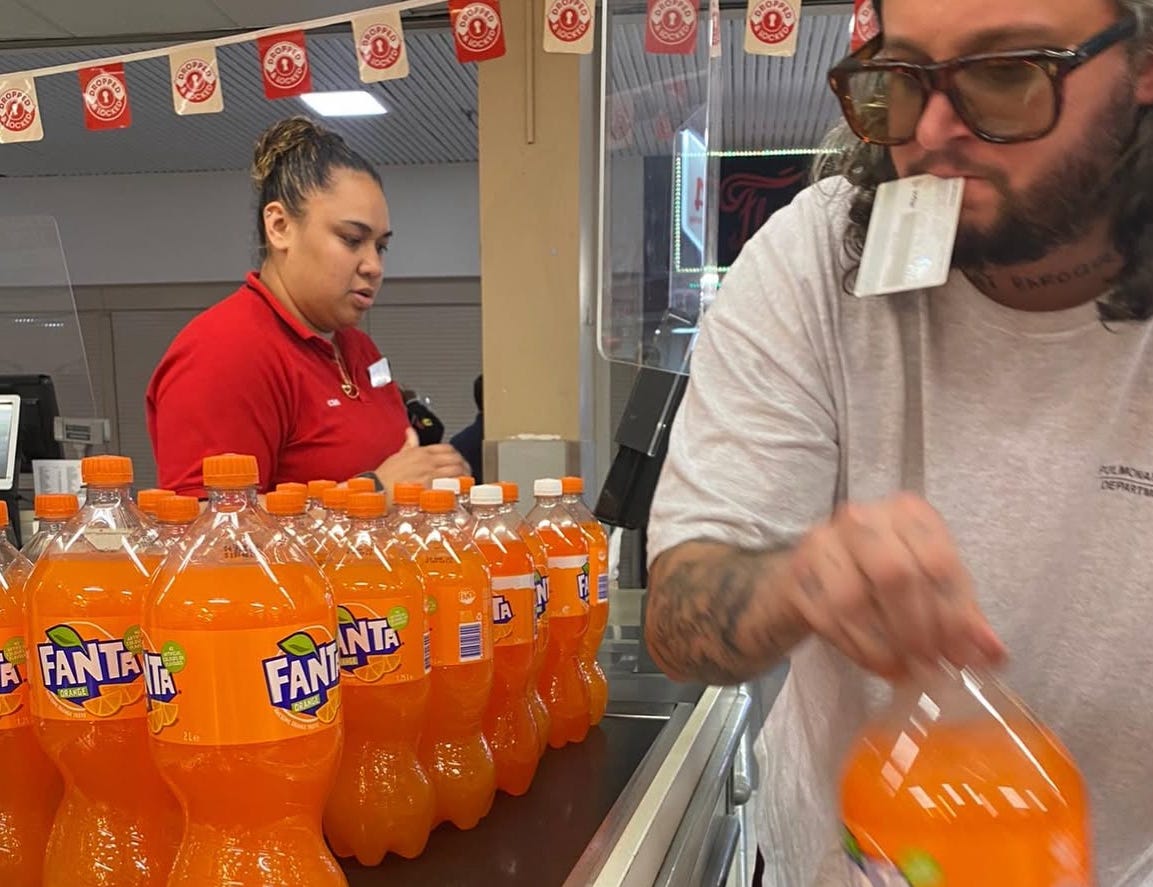
Welcome to my Substack, about a soft drink. Here I will share my attempts at creative writing through an unauthorised history, a collection of notes, research, and photographs, tracing everything from a criminally-associated yacht called ‘The Fanta’ to how the word became a homophobic slur in Brazil. How can a bottle can slip between propaganda and pop culture so easily? How does its history ferment beneath the bright packaging?
All sorts of questionable characters collect Fanta like myself, and in a way, they don’t know they are gathering what’s left after the damage is already done.