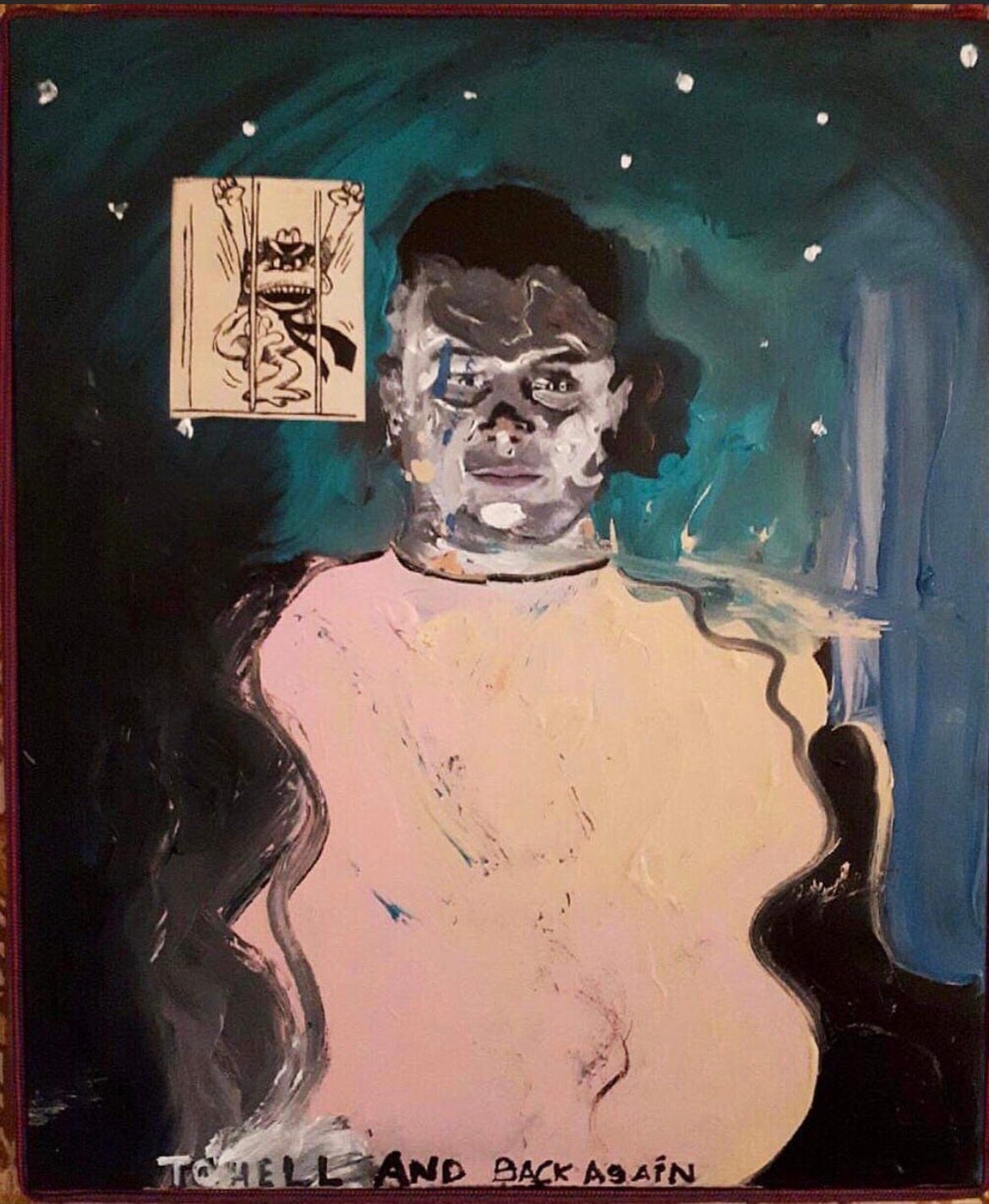
To hell and back again...
Words that knew me first

Recently, an old friend of mine passed away. He was an exceptionally gifted writer, one of those rare people who could look closely at another’s work and see truths the maker themselves had not yet recognised. When he wrote about my work, he did so with a precision that felt both generous and exacting.
As the editor of 21C, Photofile, World Art, and Tension, this perceptiveness came naturally to him. His writing moved effortlessly between insight and clarity, always grounded in care. Through his words, he often helped me understand my own paintings, and, at times, myself.
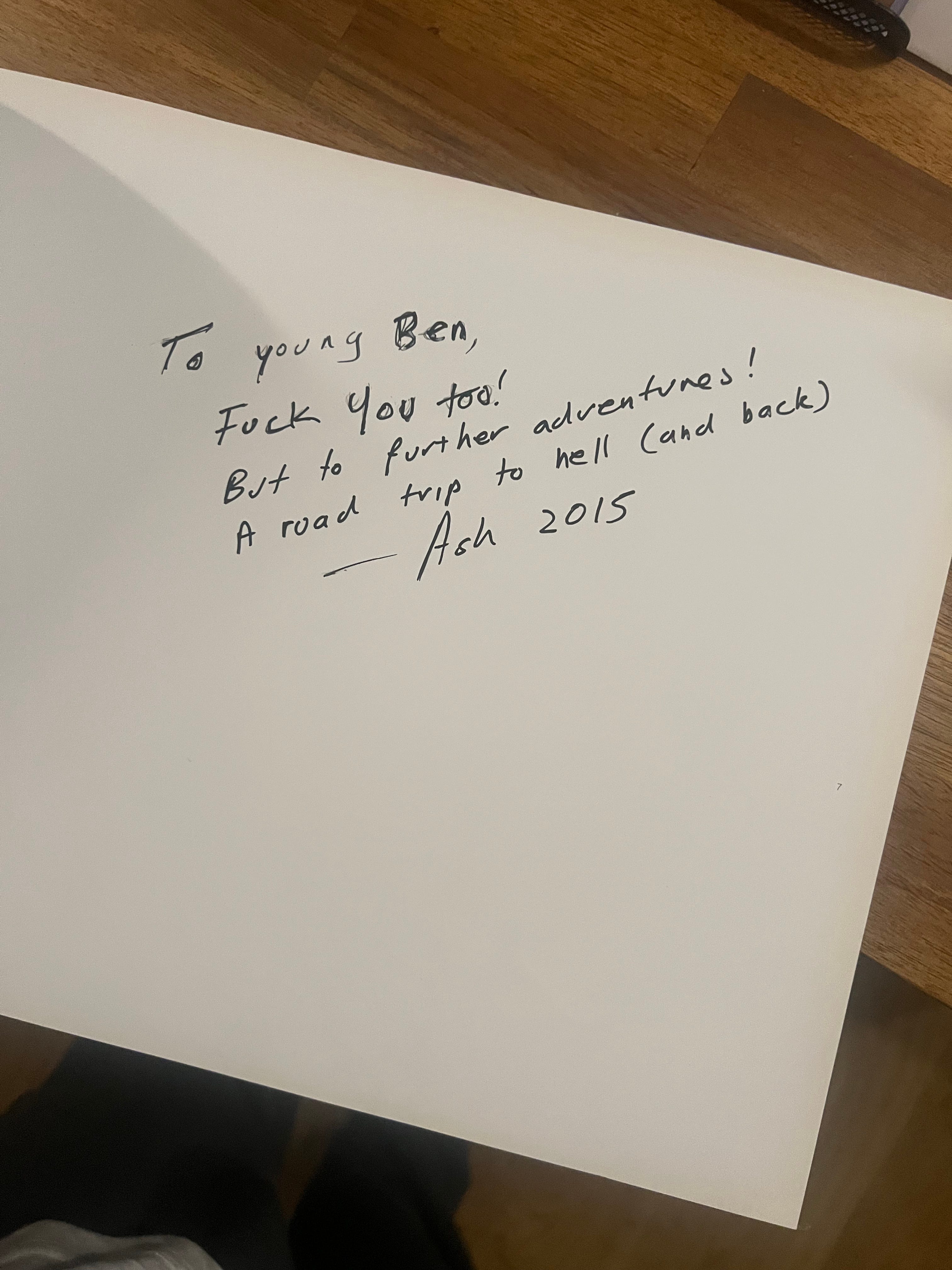
What follows are two of my favourite pieces of writing he created for me, accompanied by images of my work that inspired them. At the end, I have included my own words, shared on the day of his passing.
Ben Aitken takes no prisoners. Or, if he does, they are left scrabbling for a safe shoal of sanity. It’s nigh impossible to know where Aitkins’ surfeit of strangeness is spawned – there are hints of colourful nightmares, moments of saturated psychological protest, a diabolical Walt Disney on bad, bad lysergic acid. With a juxtaposition of anarchic painterly mayhem and still-birth animation there are hints of a schizophrenic civil war occurring on the canvas, one part writhing and squirming like fly-blown maggots caught in the desert sun, the other side receding into a cutesy cacophony of light-hearted Snow White fantasy which carries the whiff of desperate escape, try to think of something nice as the drill hits the nerve…
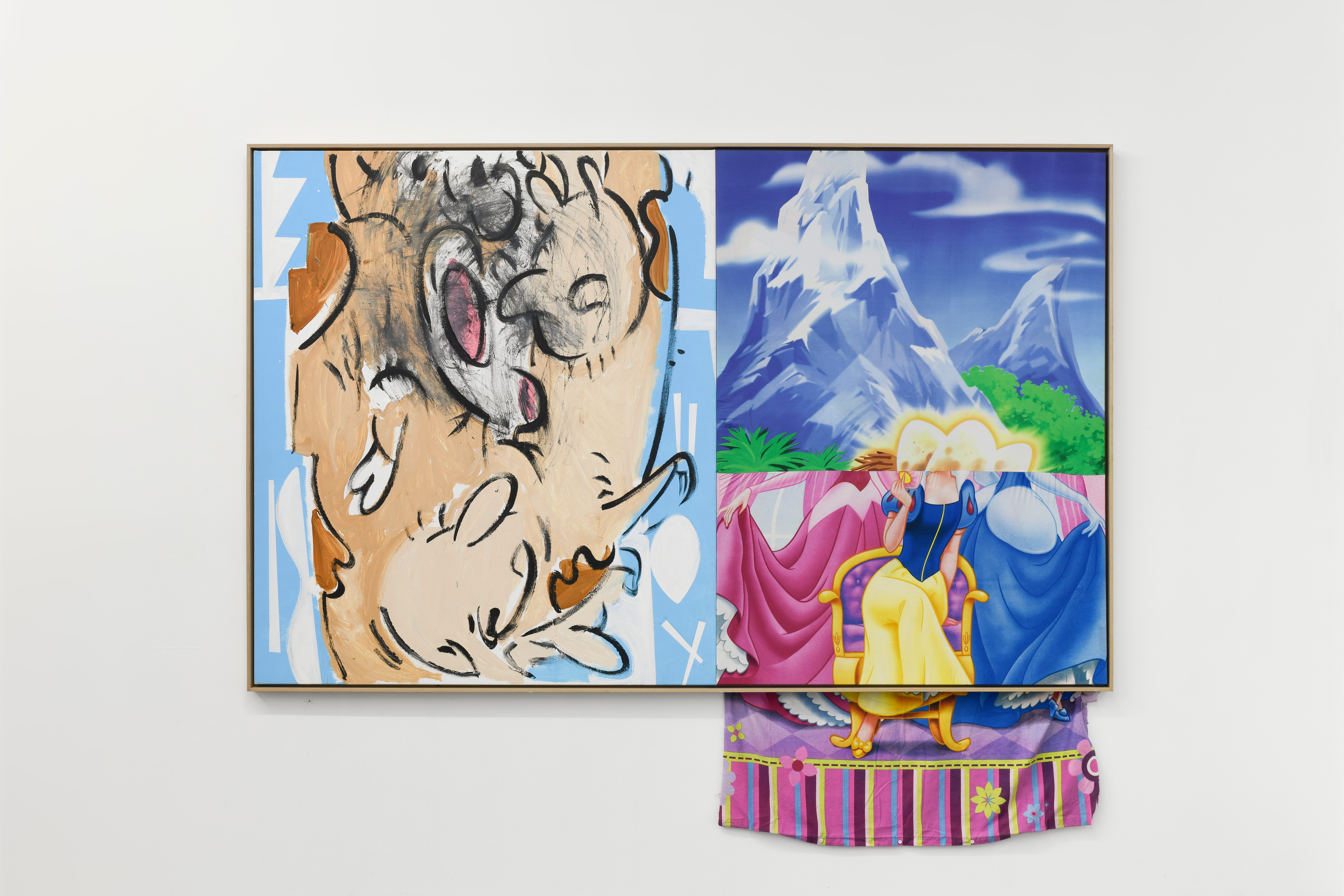
There are vermin here, performing obscene, sadomasochistic acts for the benefit of a masturbatory voyeur while Satan erupts in a scene straight from Fantasia. There are greenish growths that in colour remind one of the infected mucous of a Melbourne flu, so ghastly in their texture that a hint of nausea is the only response. What may be a self-portrait sees the artist peer wide-eyed, innocent in his impending insanity, anime figures in pursuit.
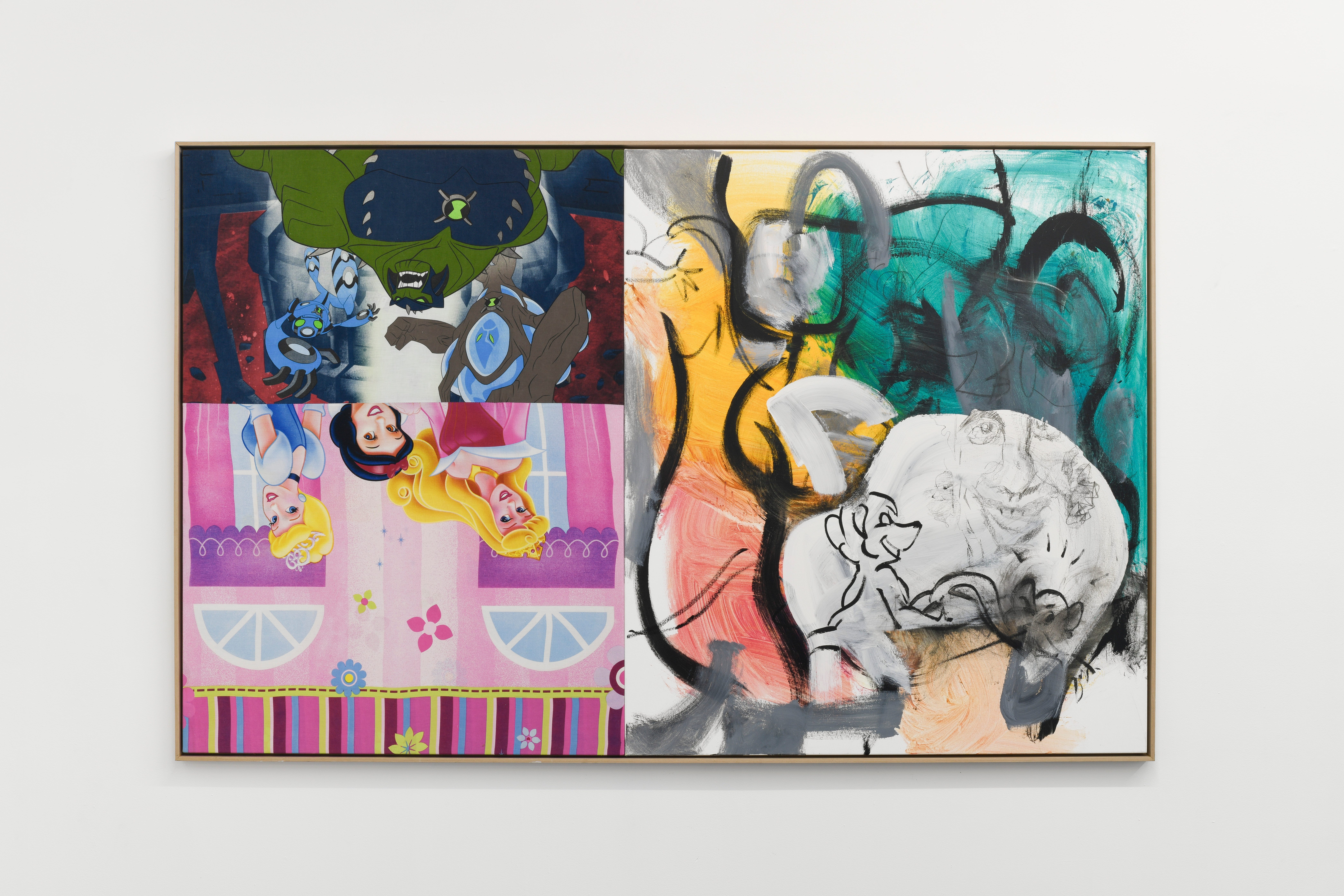
Presented with cacophonous largesse, Aitkens’ canvases are clearly unafraid of tackling his nightmares on an imperial scale, inviting the viewer to be subsumed in discomfort. If one knows the post-punk cacophony of the band Swans, with their utter embrace of debasement, one has been here/hear. If one has awoken to the result of a late-night vodka binge, mouth chewing on the ghastly aftermath of Cuban cigars and noxious chemicals dripping down the back of the throat and strange discombobulated memories drifting just out of reach like misshapen hallucinations, one has been here.
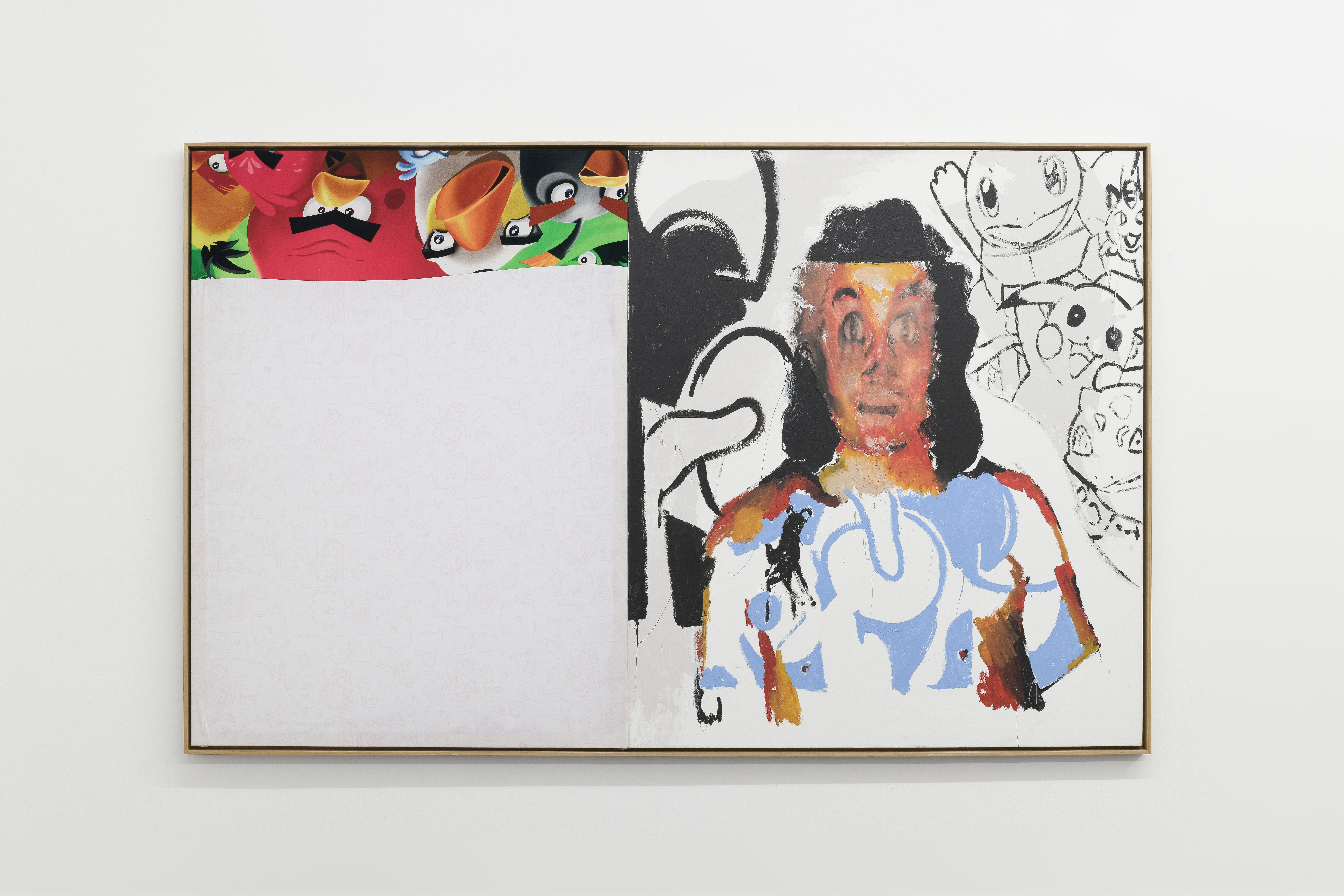
That Aitken has skill and talent is beyond dispute. He understands colour and scale like an artist three times his age, even having eschewed art school, thus making him something of an enfant terrible. But he watches other artists’ practices with an eagle eye. One can see his nods to such painters as Francis Bacon and Gareth Sansom. One can see his admiration for such Australian ‘bad boys’ as Peter Walsh (1958-2009) and Adam Cullen (1965-2012) and pray that he does no follow their lead too closely.
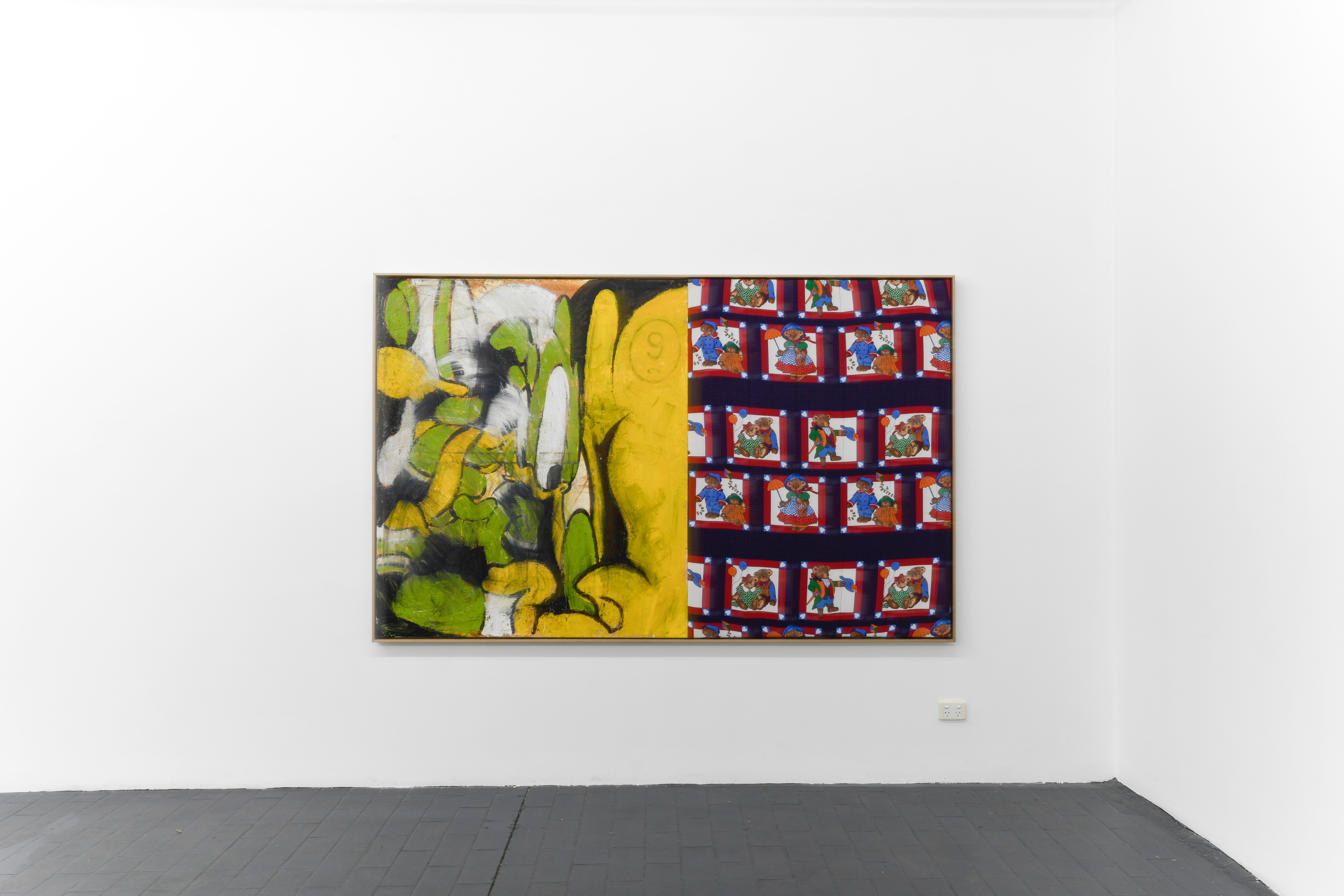
But that, thankfully, seems unlikely. Aitken emanates enthusiasm and ambition. He has, over recent years, co-founded the Melbourne gallery Nicholas Projects. He was highly commended in the 2014 Black Swan Prize for Portraiture and was selected for the competitive 2014 NotFair art fair. He has been a finalist in the Archibald Prize for his portraits of Jon Cattapan and Natasha Bieniek and he was the winner of the Tony Fini Foundation Prize at the Art Gallery of Western Australia. He has recently shown work in Haengchen Art Museum in China and has upcoming shows at the University of Arizona, and a major solo show in Bangkok’s TARS, curated by Pierre Bechon. The artist also frequently collaborates with the more senior artist Jon Cattapan and their last exhibition was held at the Latrobe Arts Institute curated by Kent Wilson. He’s hungry and he’s ambitious.
But there is indeed angst in these works. They are too visceral to deny an element of sincerity in every brushstroke, a battle between good thoughts and bad thoughts, both accepting and attempting to deny some nefarious act(s) in his past. Drugs and alcohol may have salved some of these issues in his younger days, but there can be no doubt that his drug of choice, his readily accepted addiction, is the creation of art, a weapon of both statement and salvation.
It should come as little surprise, to anyone who knows him, that Ben Aitken was something of a scallywag and rascal as a youth, prone to either cause, or become embroiled in, all kinds of strife and mayhem. His father, a somewhat strict military man, recognised this early on and, rather than watch his teenage son be hauled off to jail, suggested that perhaps he would enjoy enrolling in the armed forces. The young Aitken, bubbling with testosterone, and having grown up with stories of his grandfather’s exploits in war-torn Vietnam, thought this to be quite a grand idea – AK47s and Chinook helicopters – hell yeah! However, his mother, having stumbled upon this father-son plot, put a quick stop to such wild-boy fantasies. Ben should pursue his artistic side, she proclaimed. The conversation stopped there.

Ben Aitken would have made quite a questionable soldier. Perhaps in late ’60s Vietnam he would have ‘fitted in.’ A substantial percentage of the military at that time were conscripts and certainly lacking the training of contemporary military life – a fact which, of course, led to some of the more hideous missteps of that particular conflict. Booze and drugs, especially heroin, were ubiquitous. Aitken was far too young to have experienced his grandfather’s Asian misadventures, but he was old enough to smell the napalm of its incendiary cultural outpourings, namely such moments as the neon noir of Francis Ford Coppola’s Apocalypse Now, Oliver Stone’s Platoon and Michael Herr’s stunning new journalism in Dispatches. And somehow drugs and booze fed their way into the young artists’ own life.
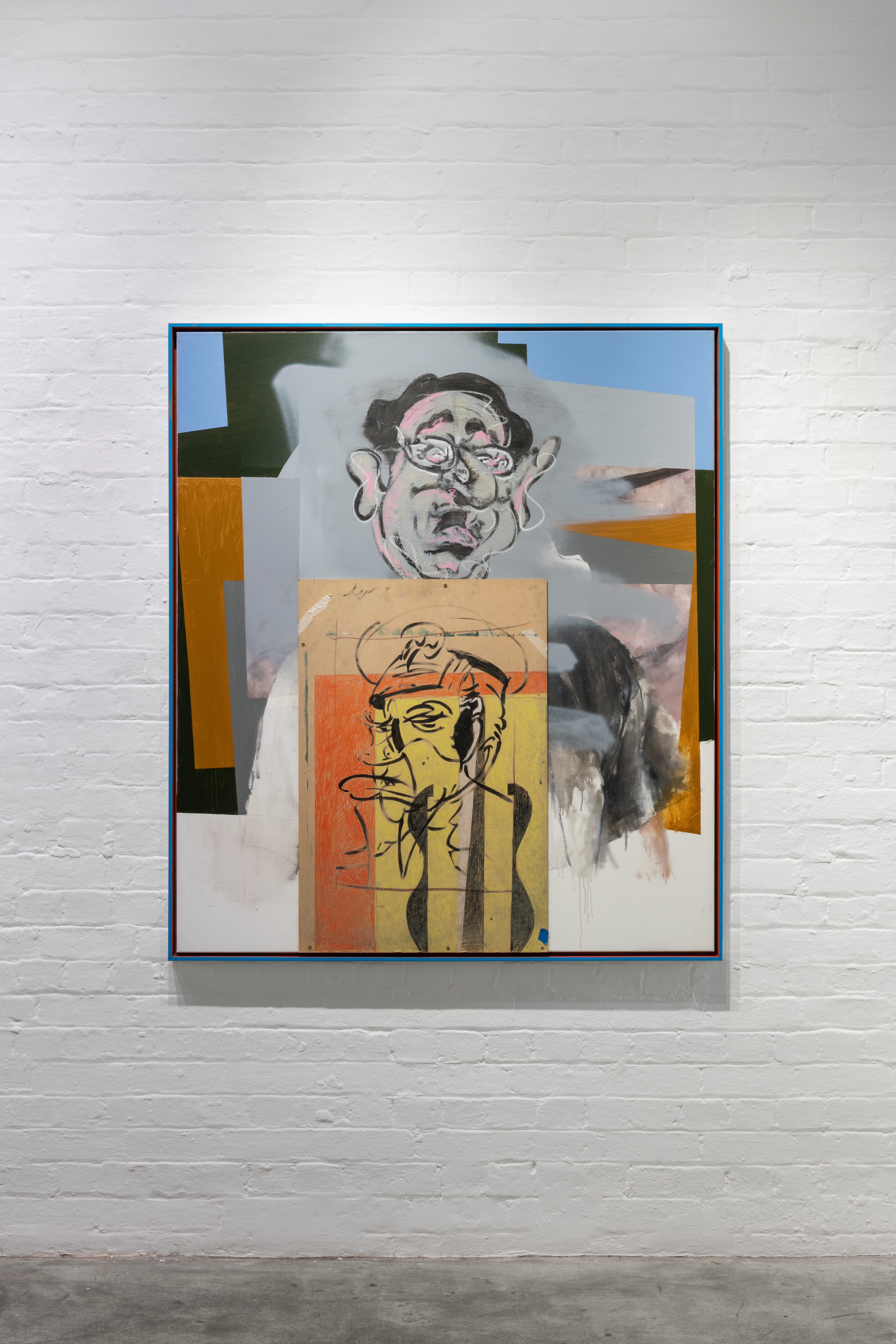
This show is aptly titled Catharsis – referencing both a terminology used for heroin addicts and slang for the disastrous confrontations between the Vietnamese and the ANZACS – shooting up (smack) and shooting up (civilians). This is a show of both catharsis and reminiscence. Violence nudges gratingly against humour. There are hints of his Great-Grandfather’s murder during a fight with American troops on Brett’s Wharf in Queensland during the Second World War and the ironies of Disney figures recreated ss savage bomb-squadron logos on bomber planes.
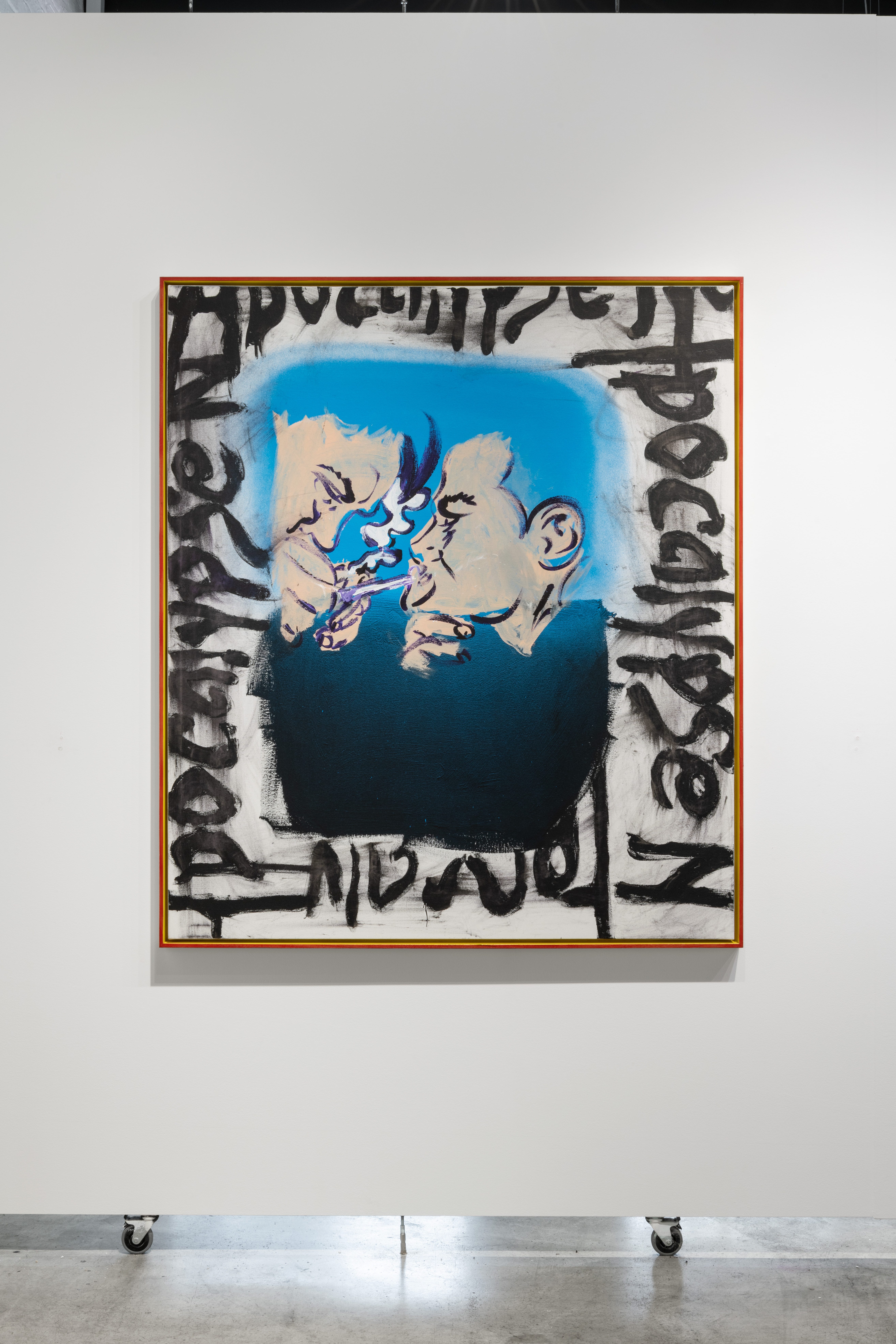
Here Aitken has appropriated, reworked and recontextualised cartoons and caricatures from the Vietnam conflict to chilling effect – not avoiding the racial visual slurs toward figures ranging from Ho Chi Minh to Henry Kissinger. This is a body of work that embraces its own catharsis in vibrant colours and gestural mayhem – the narrative of Aitken’s upbringing in a military family, boxing, substance abuse and discipline which has formed his work ethic within the art world.
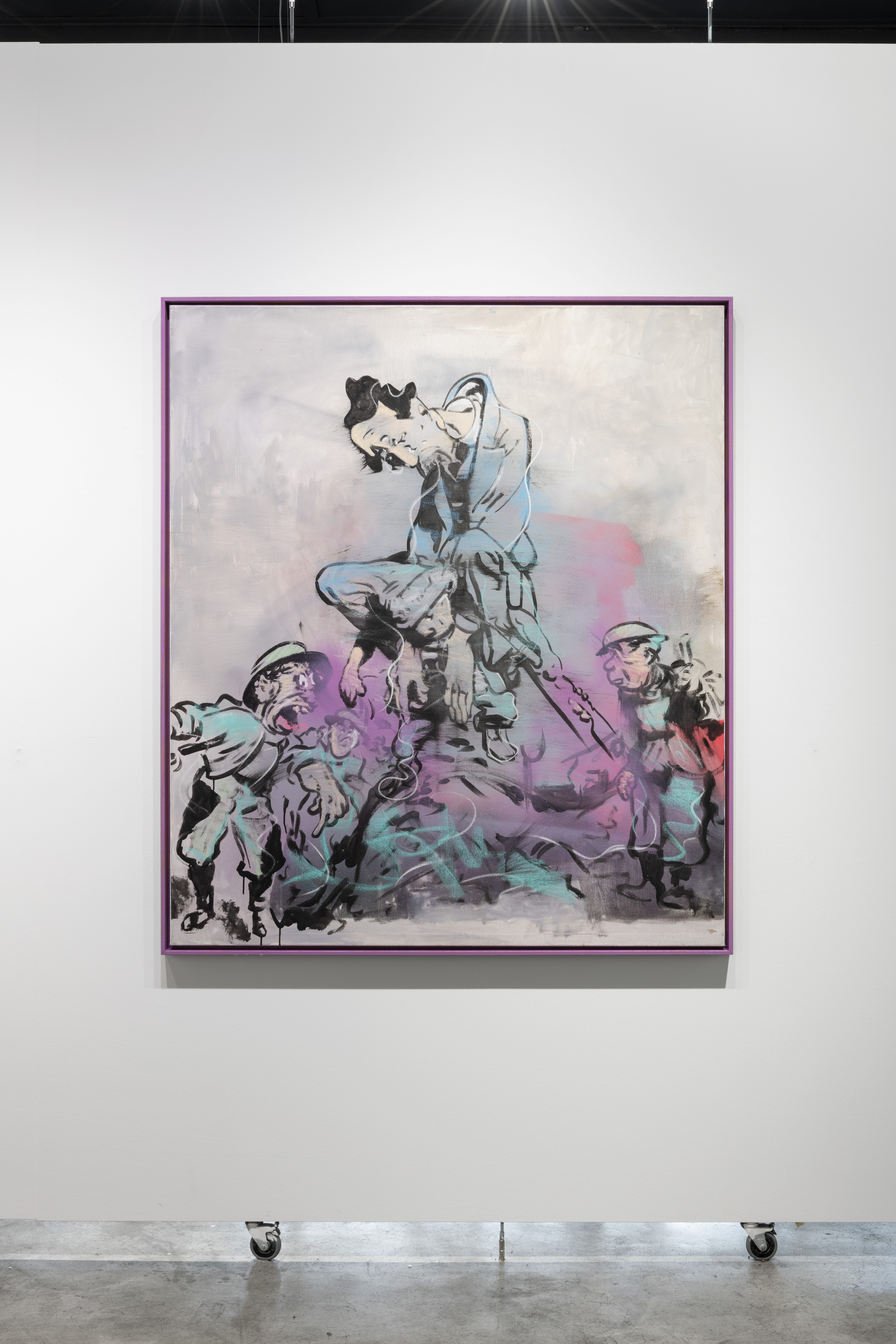
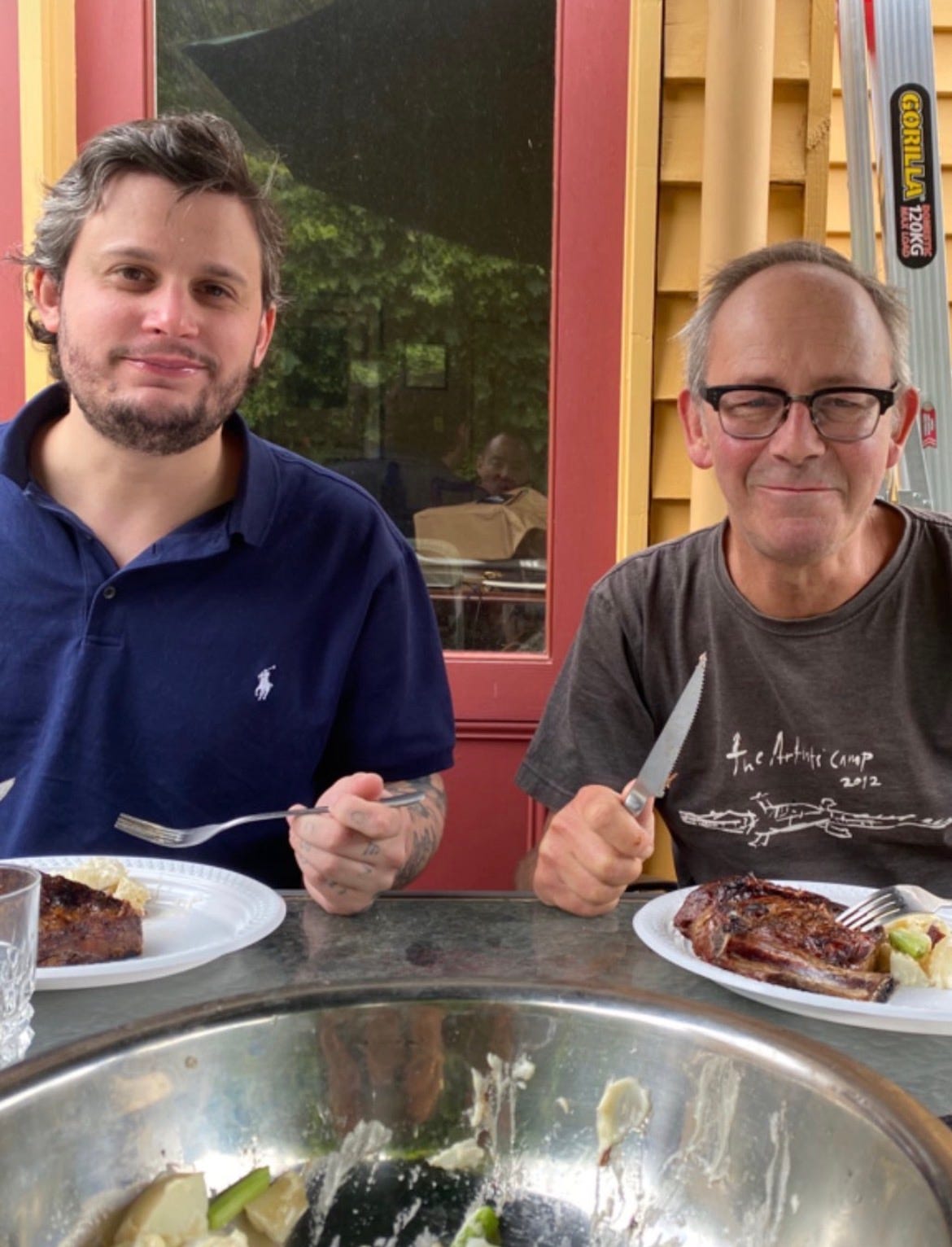
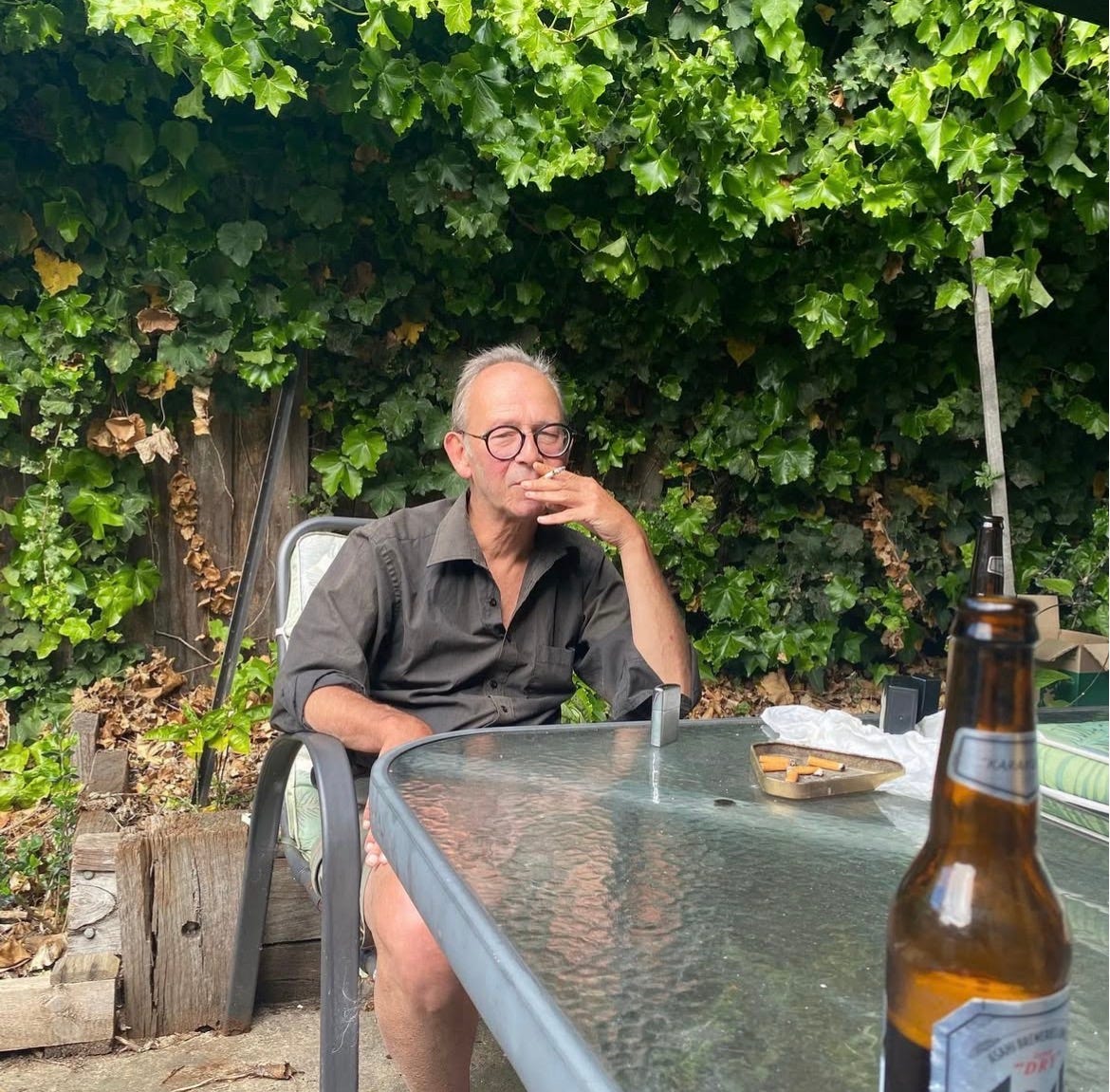
Early in my career, Ashley was very important to me, and one of the first to unconditionally support my art. He did this for others too, fostering careers in so many names we know and love today. I don’t post eulogies often but he demands a public acknowledgment. Ash wrote countless essays on my work, helping me understand myself. I had the honour of him opening my first ever exhibition. A man who was nothing but critical, and myself, accompanied by a sardonic attitude, tested each other at times. We always made up, but this time it was left too long. So tonight I’ll have an Asahi with SWANS on loud and think about the great times while wasting none on regret. Ash told me once that the liver is evil, and it must be punished. We dished out some heavy discipline, yet I started to believe he might actually outlive us all. He lived a full life, multiple in fact. A brilliant mind, the most intelligent man I’ve met; I have never had more BBQs with anyone as I have with Ash. Friends you brought into my life, Sam, Jon, Simon etc, are another reminder of your belief in me. Gareth Sansom’s work that you gifted me hangs high reminding me further of your generosity. I could go on, but my words will never emulate the weight that yours effortlessly had. And so, with that said and done; I will see ya later mate, rest in peace.